N Gauge Somerset and Dorset layout of Sturminster Newton in Dorset on the S&DJR line between Bournemouth West and Bath.
Exhibition Factsheet
Exhibition Managers can download the layout factsheet, including operating dimensions and brochure outlines below.
Introduction
Sturminster Newton is now in its third iteration after a rebuild in 2025. The layout was originally built in 2012 for use in my study at the time. By 2015, I wanted to exhibit, but I wasn’t happy with all the elements. During 2015, I replaced the backscence, some of the buildings, and reinforced the baseboards as they weren’t designed for exhibitions. As the layout changed, I collected more research and was able to make the layout more accurate, this became v2.0 . After becoming a member of the Sturminster model railway group and helping with the OO scale model of Sturminster now in the museum, I realised that there were still some areas I could improve on with a lot more photo’s and scale drawings of many of the buildings available to use. Over the years the layout had continued to run well but the track crossings on the baseboards required fettling during setup, and some of the transitions caused a few problems from time to time so a decision was made to upgrade to V3.0
Version 2.0 on show

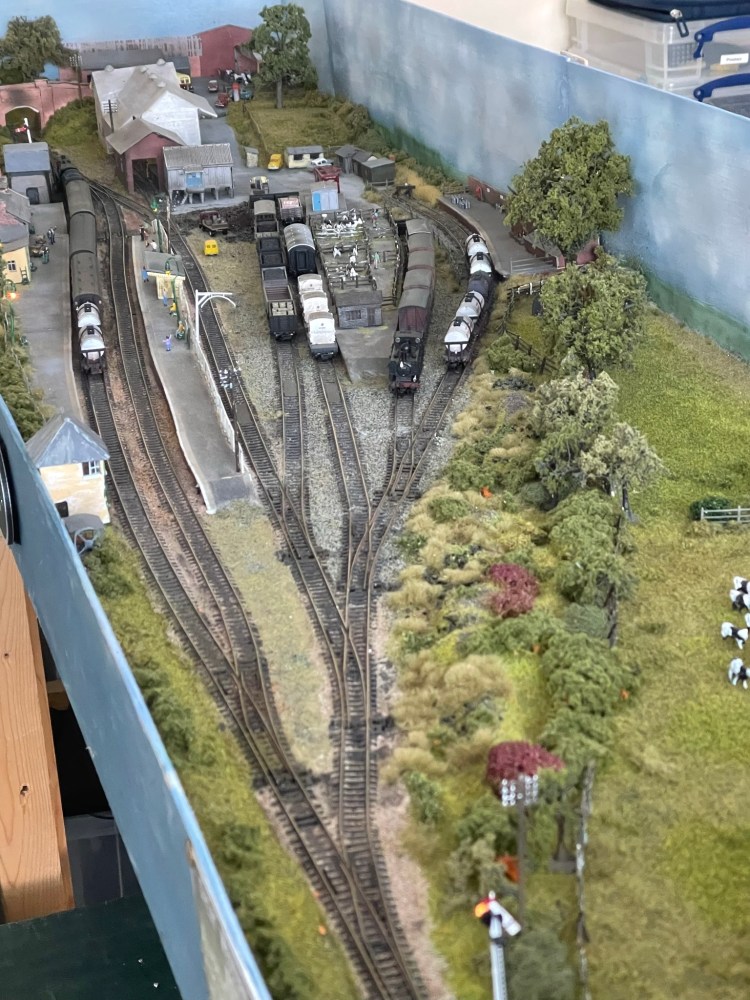
Version 3.0
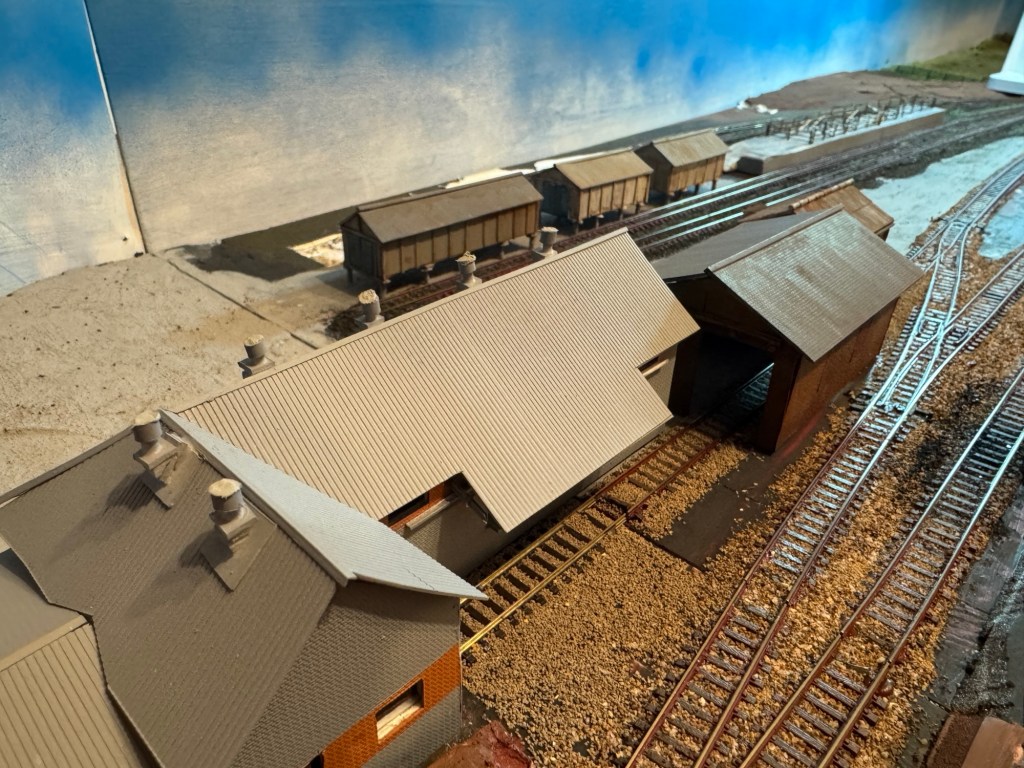
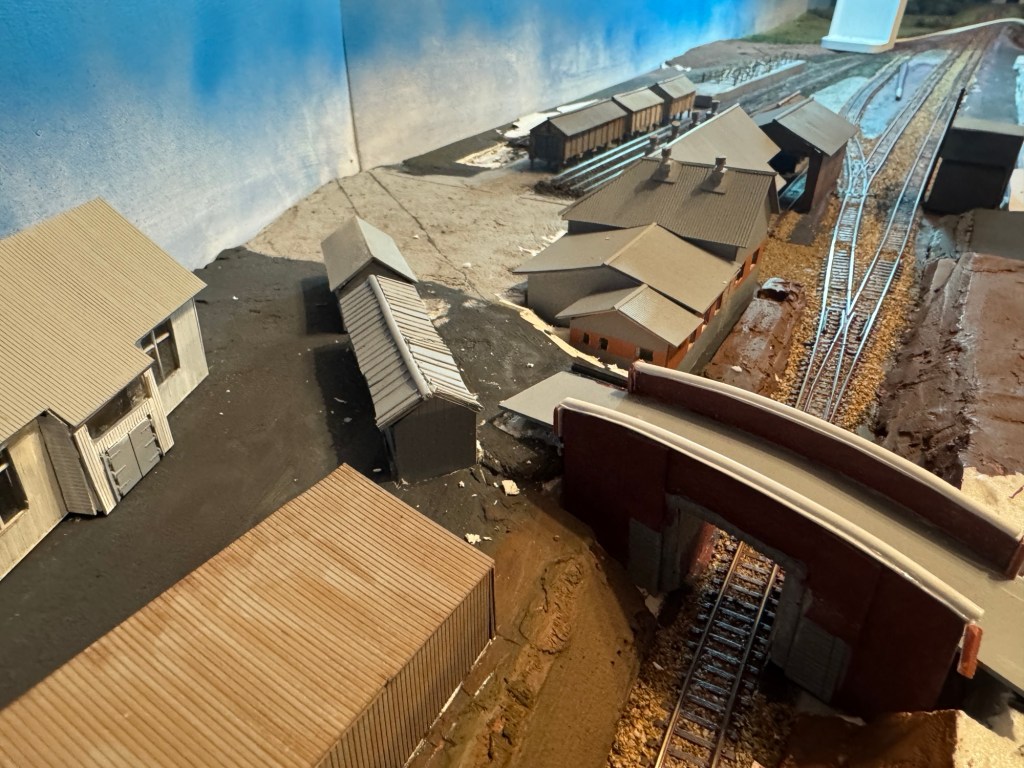
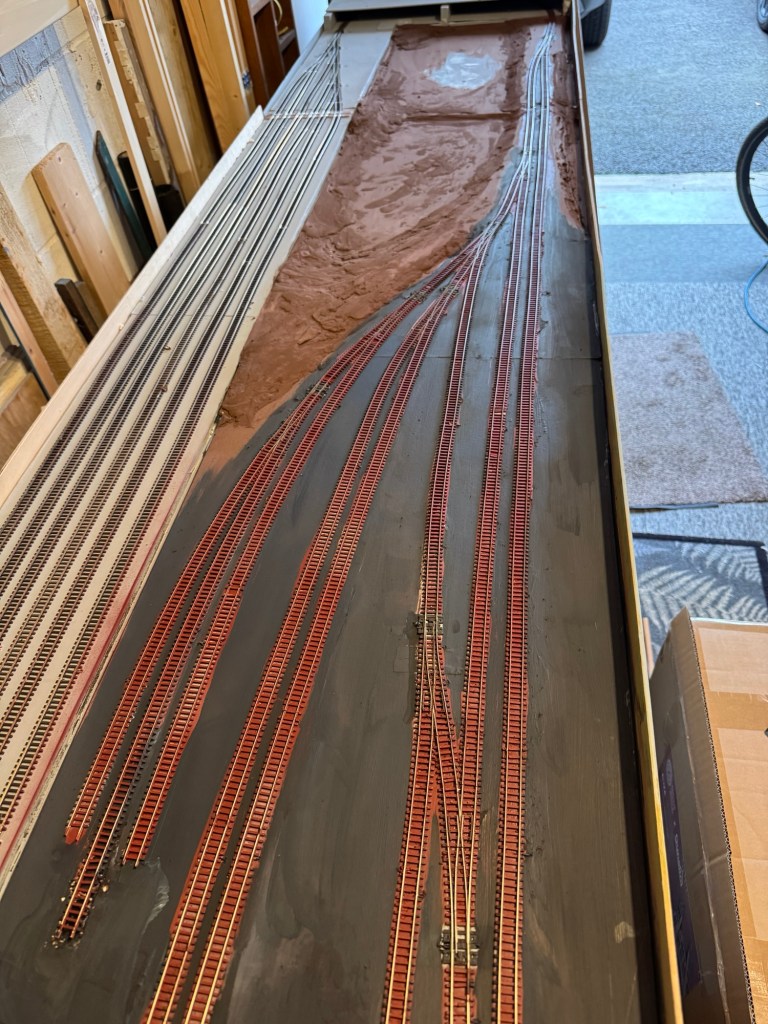
The new layout is on a set of brand new boards, a 5 foot board for the station and yard as this pattern has worked well over the years and a 3 foot board at each end that includes the loop around to a 6 road fiddle yard at the rear. The extension from 8 to 11feet allows for the Yard entry exit to have room to breathe and for both roads through the platform to extend to the southern point where the single line from Shillingstone arrives. I have taken the opportunity of squeezing in the loading dock siding which I hadn’t included in the first models. The plan below shows the new track configuration and sidings

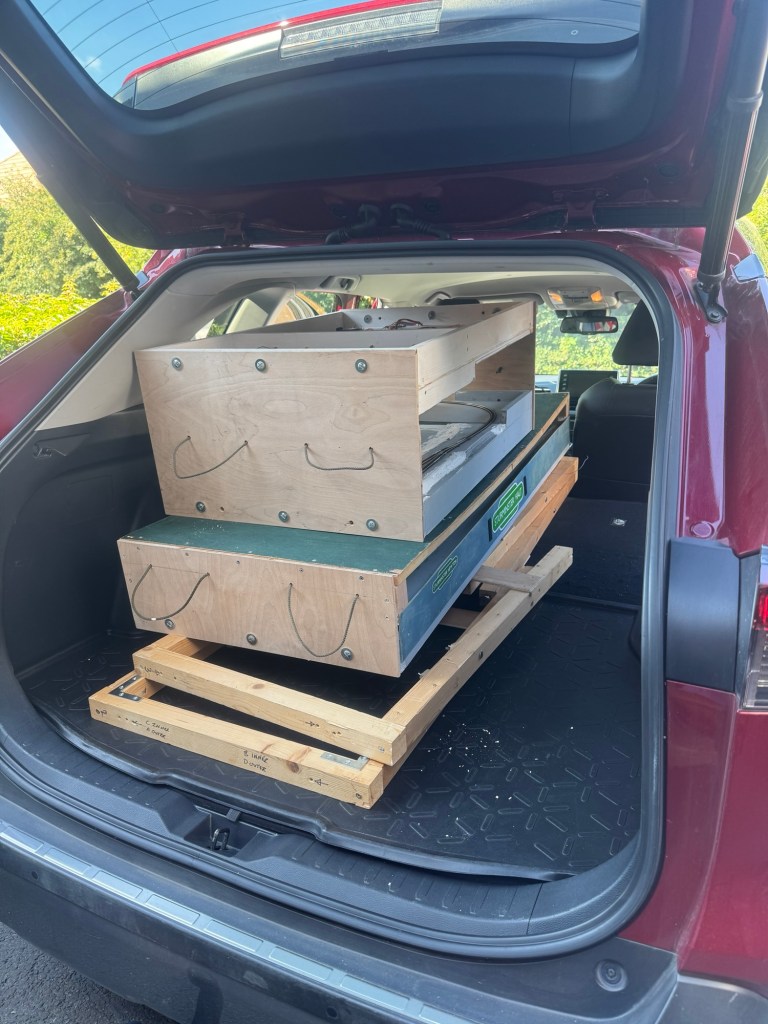
The new baseboards have been built with exhibiting in mind and will sit on top of the existing trestles. The two smaller boards have an operating area at each end and will have a display board for information and for transport will be stored face to face as a box. The existing cover for the large board has been recovered and reused.
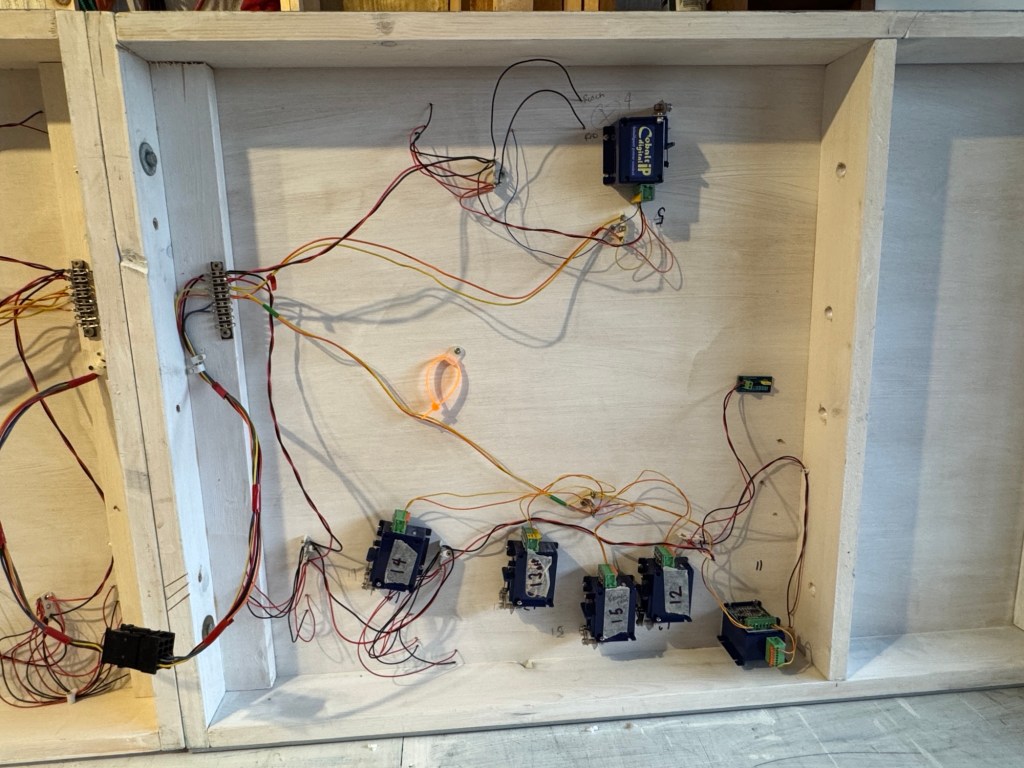
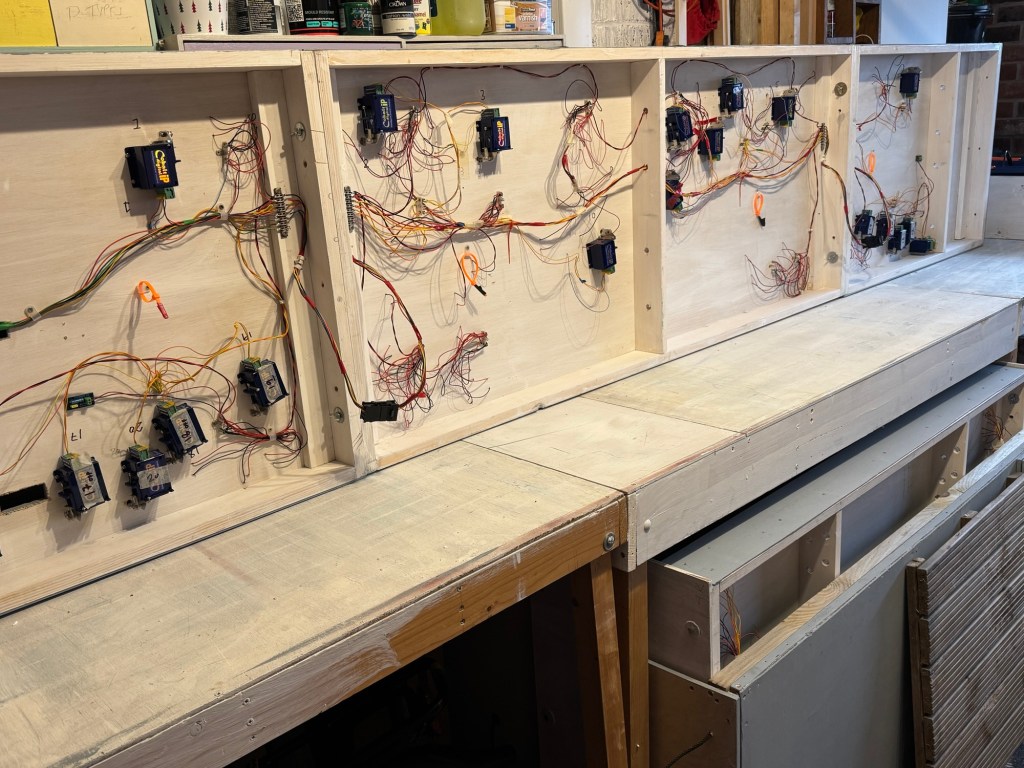
Cobalt point motors and new wiring underneath the board with the points on the scenic side modified to power the blades and disconnect from the crossings which are switched by the cobalts. Peco code 55 finescale track and points have been used throughout which I find easier to use. There is a 6-road fiddle yard at the back of the layout, with the longest roads able to fit the Pine’s Express and the shorter roads for the local and goods services. These are all longer now and easily take 8 coach trains

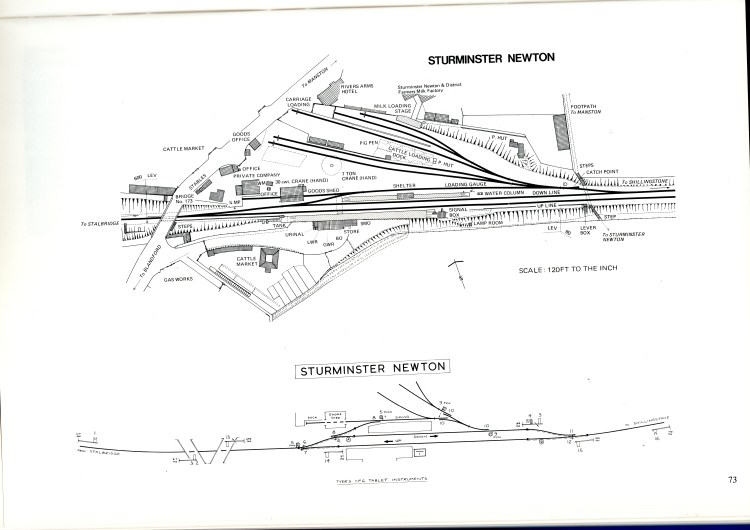
The Image above is the track plan from the “Historical Survey of the Somerset and Dorset Railway by C.W Judge and C.R Potts and is not dated. The plan shows a Water Column at the end of the southbound platform and a cattle yard behind the main station buildings. I’ve not found any photographic records that support this so can only assume the plan is from a much earlier date. Also of note is that the Signal box diagram doesn’t reflect all of the sidings shown on the plan at the top,
The layout is DCC-operated and currently operated using a Gaugemaster Prodigy controller and JMRI software. The laptop has a full mimic panel that controls routes for each Fiddleyard road and the main routes through the station.
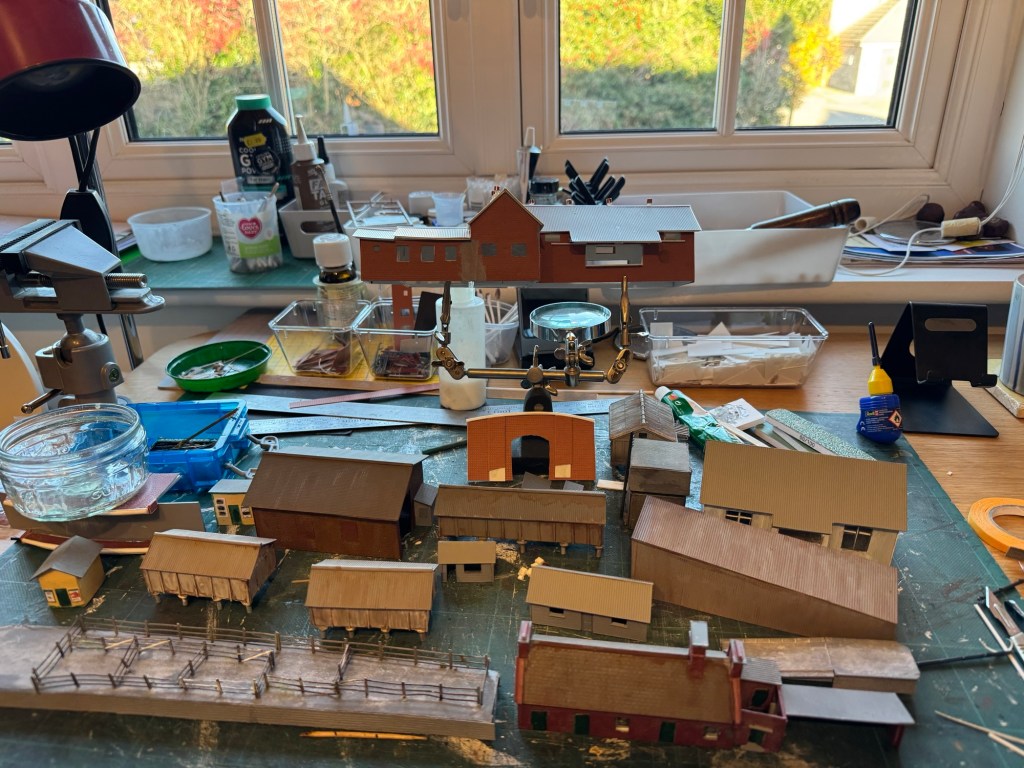
The track is ballasted with a range of different ballasts blended together for the different covers. The majority of the buildings are scratch built from Plasticard and Plasticard embossed sheets. Sizing the buildings was a challenge as the only building left is the Blandford and Webb warehouse so this was originally used as a base and the rest of the buildings based on that and the limited scale drawings available. These were surprisingly accurate at the scale drawings prepared for the museum model were within a few mm the same size. It is this accuracy that has given me confidence that the Corn Exchange, whilst looking overscale, is correct.
The trees and hedges are a mixture of different products again blended together to create a range of blended greens. The grass areas are a mixture of Static grasses and flocks applied using a static grass applicator and puffer bottle.
The signals are from Dapol with a Train Tech controller which isolates the signals from the main track power.
V3.0 Build Photographs
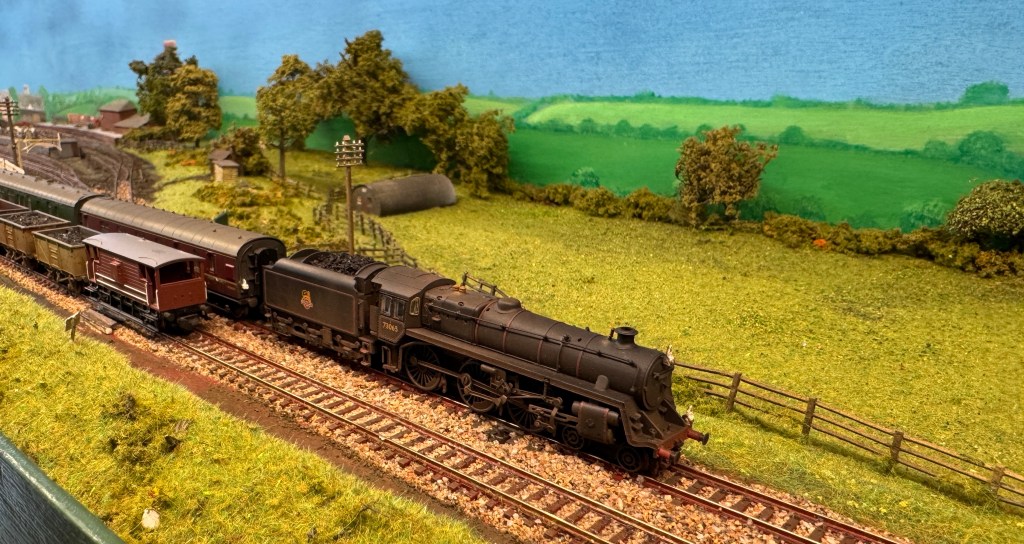
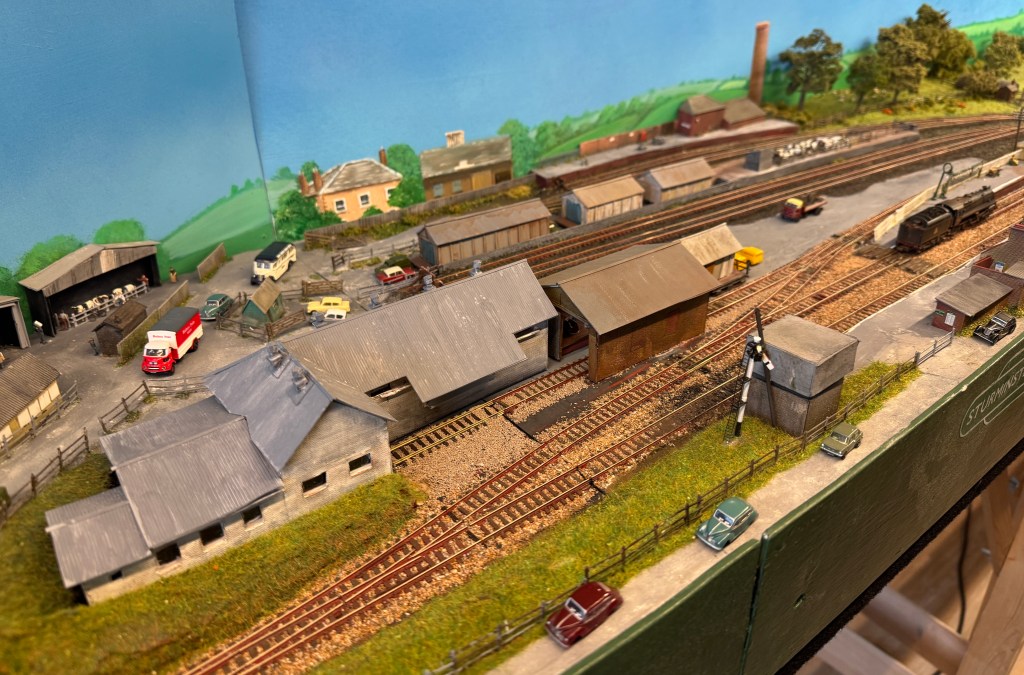
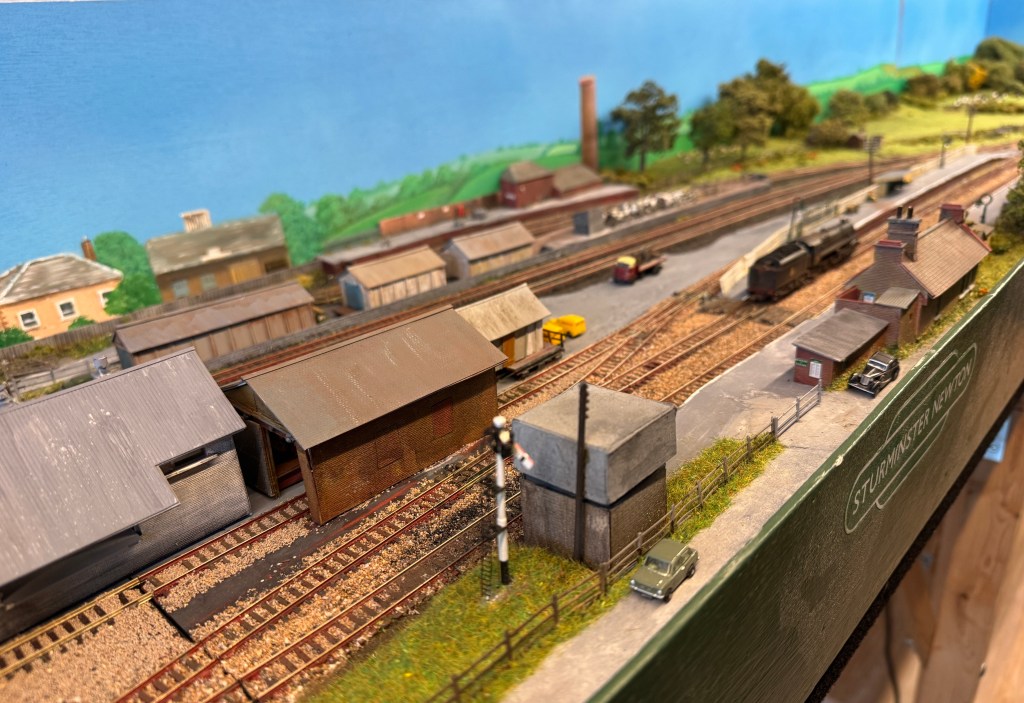


Sturminster Newton – The History
Today, nothing remains of the station or yard except for the Blandford & Webb animal feed warehouse, which was rail-served and now serves as a Carpet shop. There is some local information on display in the park built where the cutting the railway used to run through just after the station, going north was filled in along with a memorial gate.


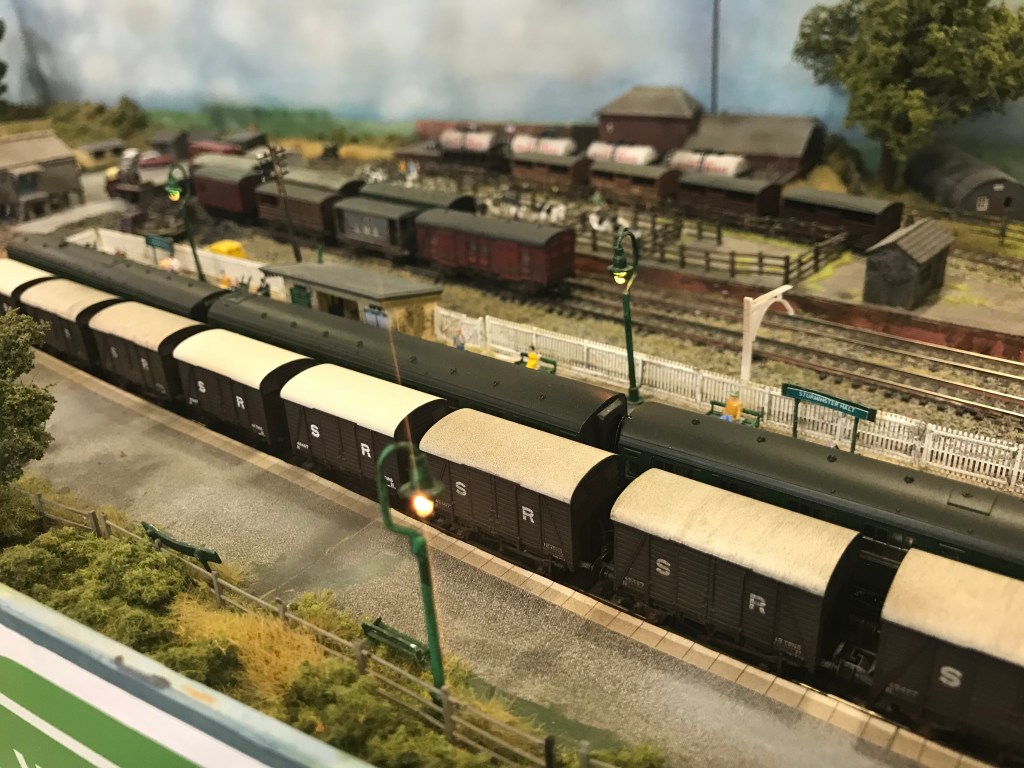
Sturminster Newton station is on the Somerset and Dorset line north of Blandford in the Stour Valley. The layout is set in the final decade before the line closed in 1966. There are many pictures of the station available in books about the S&D but I’ve not been able to find many for the surrounding area even now. The station buildings do I hope reflect the look and feel of the station in the last years of the line.
The S&D Line ran from Bournemouth West to Bath over the Mendips climbing to over 811 feet at Masbury in Somerset. The line was mainly doubled in the north but Templecombe to Blandford in Dorset was single and relied on Whittaker Tablets and passing loops at the principal stations. The line hosted the Pines Express from 1910 to 1962 when it was rerouted away, setting the line-up for closure.
The station was opened in 1863 as the Dorset Central Railway was merging with the Somerset central railway. The station was on a single line section and the station had two platforms, which were staggered with a dip on the up side to allow passengers and staff to easily cross to the down platform. The main station buildings and 16 lever signal box were on the up platform with a small shelter on the down platform. The Yard included a cattle dock, pig pens, goods shed, and offices as well as a bay for the Blandford and Webb warehouse and a passing loop.
The gates now sit over the in-filled cutting north of the station. Whilst the station area is now a car park. The Grain Warehouse is now a Carpet Shop and the last recognisable landmark in the station area. The track bed going south is clearly defined and now a cycle path that runs all the way to Shillingstone.
Rolling Stock
I aim to run prototypical stock for the period from 1956 to closure. BR Black Locos with late emblems, green and maroon coaches, and a range of wagons and trucks. As I have been able I have extended the stock to start running between 1925 and 1940 and this is slowly increasing.
During the 1955-66 period the range of motive power consisted of 4F, 7F, Black 5’s and the standard BR classes 3MT, 4MT, 5MT and 9F’s. West Country’s, Pannier Tanks, Colletts and other engines are occasional visitors
The majority of these are available from Graham Farish and Dapol with the notable exception of the 7F which is only available in OO. Maybe this will be shrunk down someday but with less than 20 produced it may be to niche for the moment. The 3F and 2P is made by Union Mills and I still need to acquire these and keep my eye out for their availability. Recent releases of Maunsell, Bulleid, and Thompson coaches have really added to the variety of coaching stock
I typically run the following
Up and down pines one with southern green Mk1s and the other with mixed maroon stock of Mk1’s, Gresley and Stainer types. Up and down locals using Maunsell sets or Stainer sets of 3 coaches. Range of Goods traffic including Milk tankers serving the dairy, Cattle wagons for the market, and through trains for coal and mixed goods.
Track plan

Best in Show
Very pleased to be awarded best in Show at the WSNG Annual Show in 2015

Exhibition Factsheet
Exhibition Managers can download the layout factsheet, including operating dimensions and brochure outlines.
 GRC Railways